
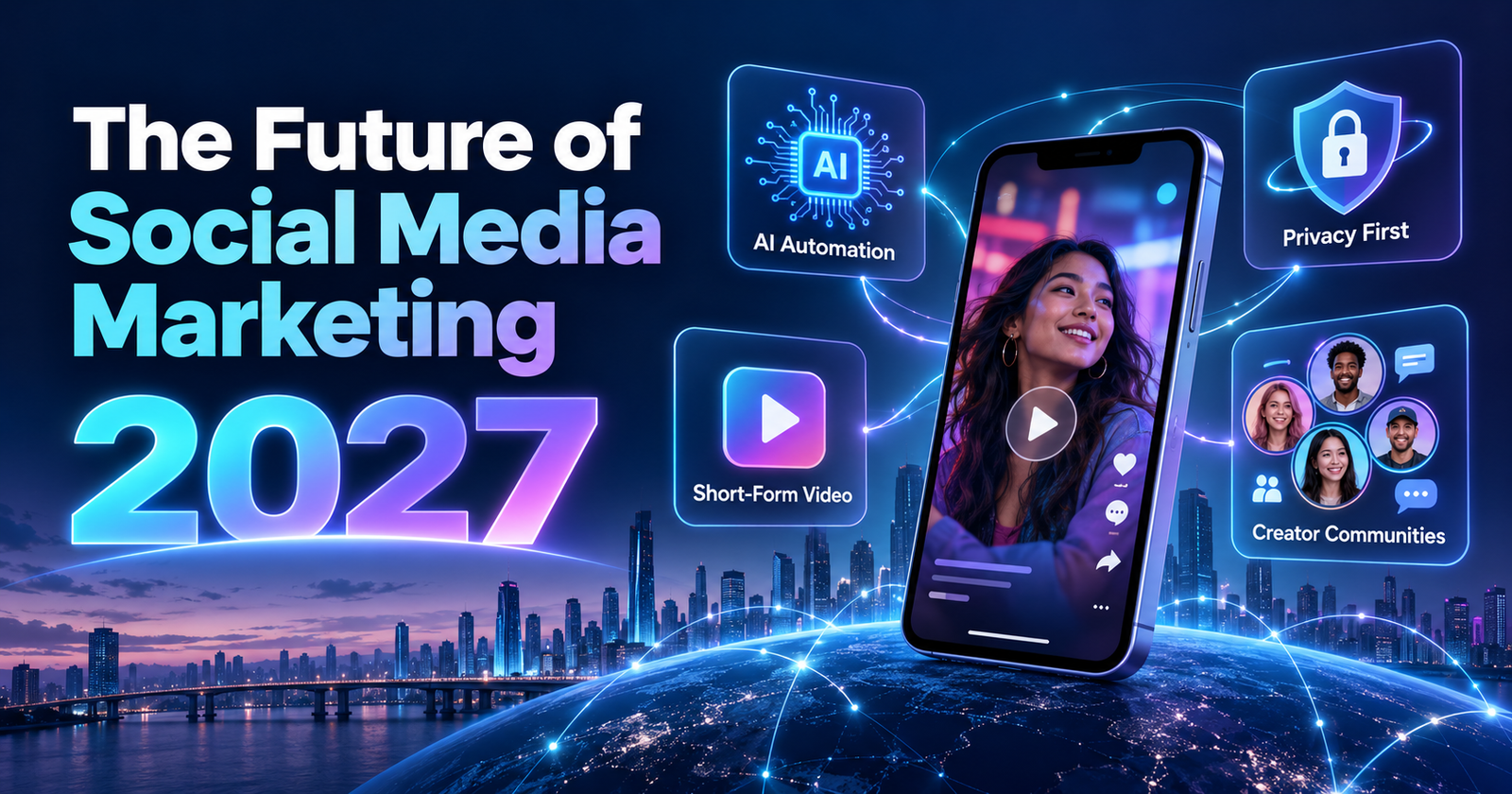
Social media has changed the way people communicate, shop, discover new ideas, and interact with businesses. A company can now reach potential customers from almost anywhere in the world with just a few posts or videos. However, getting attention is becoming harder because every platform is crowded with new content every second. As we move toward 2027, businesses will need to think beyond simply posting regularly. They will have to understand what people actually want to see, watch, and share.
The future of social media marketing will not be about following every trend. It will be about creating meaningful experiences and building stronger relationships with audiences.
Short-Form Videos Will Stay Strong
Short videos have become one of the easiest ways to capture people's attention. Platforms such as Instagram, TikTok, and YouTube have made quick videos a normal part of everyday browsing.
This trend is expected to continue in 2027. Businesses will use short videos to explain products, answer questions, share tips, and introduce their teams. However, simply creating videos will not be enough.
People scroll quickly when something fails to interest them. A useful idea, interesting story, funny moment, or simple demonstration can give viewers a reason to stop and watch.
Authentic Content Will Build Trust
People do not always want to see perfect advertisements. In many cases, they prefer content that feels honest and relatable.
A business can show how its products are made, introduce employees, share customer experiences, or give people a look behind the scenes. These small details can make a company feel more approachable.
In 2027, brands that show their personality may have an easier time building trust. Customers want to know there are real people behind the business, not just carefully prepared promotional messages.
Social Platforms Will Be Used for Search
Social media is becoming a place where people look for answers. Someone might search for a restaurant recommendation, a product review, travel advice, or a quick tutorial without opening a traditional search engine.
This creates an opportunity for businesses to make their social content more useful and easier to discover. Clear captions, helpful videos, and straightforward explanations can help people find the information they need.
Instead of posting something simply because it is time to publish, businesses should ask whether the content answers a question or solves a problem.
Smaller Creators Can Make a Big Difference
Large influencers can reach huge audiences, but bigger numbers do not always lead to better results. Smaller creators often have strong relationships with their followers because their communities are more focused.
For example, a creator who talks specifically about fitness equipment may have a smaller audience than a general lifestyle influencer. However, their followers may be much more interested in buying fitness products.
Because of this, businesses may pay more attention to smaller and niche creators in 2027. The right audience will matter more than a large follower count.
Social Shopping Will Become Easier
Social media and online shopping are becoming increasingly connected. People can discover a product in a video, read comments, check reviews, and then make a purchase without spending much time searching elsewhere.
This is convenient for customers and useful for businesses.
Brands will need to make product information clear and provide content that helps people make informed decisions. Demonstrations, customer reviews, comparison videos, and simple tutorials can make products easier to understand.
Instead of constantly telling people to buy something, businesses can focus on showing how their products fit into everyday life.
Building Communities Will Be Important
Having thousands of followers may look impressive, but follower numbers do not tell the whole story. A smaller group of active customers can be more valuable than a large audience that never interacts with a brand.
Businesses can build communities through discussions, live sessions, private groups, comments, and direct conversations. These interactions give customers a chance to ask questions and share their experiences.
When people feel connected to a brand, they are more likely to return and recommend it to others.
Customer Service Will Move Further Into Social Media
Social media is no longer only a marketing channel. Customers already use it to ask questions, report problems, and share their opinions about businesses.
That means companies will need to pay attention to messages and comments. A quick, respectful response can improve a customer's experience, while ignoring a genuine concern can damage trust.
By 2027, social media teams may have an even bigger role in customer service. Marketing and customer support will often work closely together instead of operating as completely separate areas.
Personalised Experiences Will Become More Common
Not every customer is interested in the same type of content. Someone who is discovering a brand for the first time may want basic information, while an existing customer may be interested in product updates or support.
Businesses will increasingly create different content for different groups. This can make social media feel more relevant instead of giving everyone exactly the same message.
Good personalisation should be helpful rather than intrusive. Customers should feel that a brand understands their interests without making them uncomfortable.
Technology Will Support Marketing Teams
New technology will continue to influence social media marketing. Businesses can use modern tools to understand audience behaviour, track content performance, organize campaigns, and handle repetitive tasks.
This can be especially helpful for small companies that have limited marketing resources. Saving time on routine work allows marketers to spend more energy on ideas and communication.
Still, technology cannot replace genuine creativity. A tool can help produce or organize content, but a strong idea usually comes from understanding people and their everyday experiences.
Quality Will Matter More Than Posting Every Day
Some businesses still believe that posting as often as possible is the best way to stay visible. But more content does not always mean better content.
A thoughtful post that teaches something useful can have more impact than several posts that people ignore. Businesses should therefore focus on creating content with a clear purpose.
Before publishing, marketers can ask a simple question: “Would I stop scrolling to look at this?”
If the answer is no, the idea may need some improvement.
Brands Will Need to Adapt Quickly
Social media platforms change constantly. New features appear, popular formats disappear, and user preferences can shift within a short period.
Businesses should be prepared to experiment. A strategy that works today may need to be adjusted tomorrow.
The goal should not be to copy every new trend. Instead, companies should test new ideas, watch how their audience responds, and keep the approaches that actually produce useful results.
Human Connection Will Remain Important
Despite all the technological changes coming to social media, people will still want genuine communication.
Customers remember brands that make them feel heard. They also remember companies that provide useful information, respond politely, and communicate in a way that feels natural.
That human side of marketing cannot be replaced simply by using new tools or platforms.
Conclusion
The future of social media marketing in 2027 will be more focused on relationships than simple follower numbers. Short-form videos, social shopping, creator partnerships, personalised content, online communities, and faster customer service will all have important roles to play.
At the same time, businesses should not become too dependent on trends. Platforms will continue to change, but the basic needs of customers will remain familiar. People want useful information, honest communication, good experiences, and brands they can trust.
Businesses that listen to their audiences and create content with a real purpose will be in a stronger position. In the end, successful social media marketing will not simply be about getting more views. It will be about giving people a reason to stay, interact, and come back.